
Jan Tschihold
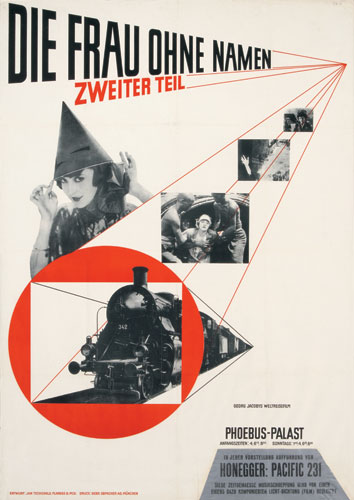
B, Jared (2009) 'Jan Tschihold Is...' [Internet], (location unknown). Available from: http://static.guim.co.uk/sys-images/Guardian/Pix/pictures/2008/12/5/1228485782217/Gallery-Tschichold-The-Wo-002.jpg
The poster combines the typical modernist technique of combining design and grayscale photography, all the while combining an eastern European colour code of red, black and grey, hinting towards Russian Constructivism, especially from the triangular "red wedge" shape in the centre of the piece.
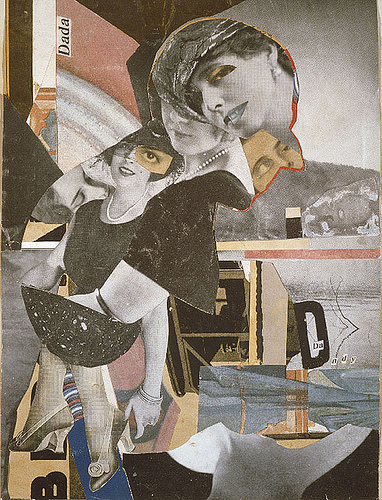
Publisher and Year unknown, 'Hannah Hoch' [Internet] (location unknown). Available from:
http://www.dadart.com/dada-media/Hannah-Hoch-DaDandy-1919-p.jpg
This piece proves the heavy use of photo-montage and college of the Dadaists of the 1920's. Hoch interpreted the social and political climate of the time, reacting to the travesties of World War 1 through this movement. She also confronted themes of feminism throughout her career after the women's rights vote and how equality between men and women was rising in the modern age.

John Heartfield (Helmut Herzfeld)
Rider, B (2010) 'John Heartfield - Photomontage inspiration' [Internet] (location unknown). Available from:
http://benjaminrider.blogspot.com/2010_10_01_archive.html
Herzfeld (or Heartfield, as he was commonly known) continually used Dadaist styles of photo-montage, depicting the Nazi regime in a deeply satiristic way, mocking much of their propoganda recruitment techniques. This image specifically addresses Hitler and attacks the Nazi leader as a man who lacks backbone, and stands replaced by money. His heart is the swastika, possibly misinterpreting his devotion to the party, but more probably how at the heart, Adolf lived an evil existence. It is plain to see this is a modernist work, as it reacts (negatively) to the political climate of the time, much like Hannah Hoch.

Varvara Stepanova
McFadden, M, (2007) "History Photography and Graphic Design" [Internet], Portland, Oregon. Available from: www.flickr.com/photos/
Stepanova was a typically Constructivist artist who encouraged themes involving the Russian Revolution in her work. In this particular image, you can see that Vavara emphasises the use of red (the red wedge) and the black and white collaging of political scenes, including speeches and crowds.

Walter Allner
"30 GSM", (2006), "Walter Allner", [Internet], Location Unknown. Available from: 30gms.com/tags/C27/P40/
A fellow student of the Bauhaus, Allner went on to establish himself as a major player in German modernist graphic design, always pushing forwards visual aesthetics in how they were displayed and presented. Much of his work involved design for the magazine "Fortune", and this is just one example.


No comments:
Post a Comment